Electric vehicles are often praised for having lower maintenance requirements than traditional gasoline-powered cars. Without components such as engine oil, spark plugs, timing belts, or complex exhaust systems, EVs generally require fewer routine service visits. However, that doesn’t mean they are maintenance-free.
Like any vehicle, an electric car still needs regular care to ensure safe operation, reliable performance, and long-term durability. Items such as tires, brakes, suspension, cabin air filters, coolant systems, and the high-voltage battery all play an important role in keeping your EV running efficiently.
Understanding what maintenance is required—and how often it should be performed—can help reduce unexpected repair costs while protecting your vehicle’s resale value. Following the manufacturer’s recommended maintenance schedule also helps support safe, reliable operation and long-term vehicle performance.
Whether you recently purchased your first electric vehicle or are considering switching from a gasoline-powered car, learning the basics of EV maintenance will help you enjoy a smoother ownership experience.
In this complete guide, you’ll learn what maintenance an electric car actually needs, how EV servicing differs from traditional vehicles, common maintenance tasks, expected costs, and practical tips to keep your EV in excellent condition.
Table of Contents
Do Electric Cars Need Maintenance?
A common misconception is that electric vehicles require no maintenance at all.
While EVs eliminate many routine service tasks associated with gasoline engines, they still contain mechanical, electrical, and safety-related components that require periodic inspection and maintenance.
Regular servicing helps ensure that your electric vehicle remains safe, efficient, and reliable throughout its lifespan.
Ignoring routine maintenance may reduce efficiency, increase tire wear, shorten component life, and potentially lead to more expensive repairs in the future.
EV Maintenance vs. Gasoline Car Maintenance
One of the biggest advantages of electric vehicles is their simplified drivetrain.
Unlike internal combustion engine vehicles, EVs do not require:
- Engine oil changes
- Oil filters
- Spark plug replacement
- Fuel filters
- Engine air filters
- Timing belt replacement
- Exhaust system repairs
Because these maintenance items are eliminated, many EV owners spend less time and money on routine servicing.
However, electric vehicles still require regular inspections of several important systems.
Why Electric Cars Require Less Maintenance
Electric vehicles use far fewer moving parts than conventional gasoline-powered vehicles.
A traditional internal combustion powertrain contains many moving components that experience friction, heat, and wear.
An electric motor, by comparison, has a much simpler design with significantly fewer moving parts.
This simpler engineering contributes to:
- Lower routine maintenance requirements
- Reduced mechanical wear
- Improved reliability
- Fewer fluid changes
- Lower long-term service costs
Although EVs still require maintenance, the overall service schedule is generally simpler than that of comparable gasoline vehicles.
Related Guide: Still deciding whether to buy an EV? Read our Are Electric Cars Worth It? Complete 2026 Buyer’s Guide.
Regenerative Braking Reduces Wear
One feature that helps reduce maintenance costs is regenerative braking.
Instead of relying entirely on traditional friction brakes, many electric vehicles use regenerative braking to slow the vehicle while recovering energy and sending it back to the battery.
Because the conventional brake pads are used less frequently, they often last much longer than those found in gasoline-powered cars.
Benefits include:
- Reduced brake pad wear
- Longer brake component lifespan
- Improved driving efficiency
- Better energy recovery
This is one of the reasons why many EV owners experience lower maintenance expenses over time.
Essential EV Maintenance Tasks
Although electric vehicles eliminate many traditional maintenance items, several routine inspections remain important.
These tasks help maintain safety, efficiency, and long-term reliability.
Regular Software Updates
Modern electric vehicles rely heavily on software to control battery management, charging, energy efficiency, and many vehicle systems.
Manufacturers regularly release updates that may improve:
- Battery management
- Charging performance
- Energy efficiency
- Infotainment features
- Driver assistance systems
- Overall vehicle reliability
Some vehicles install updates automatically over the air (OTA), while others may require installation during a service visit.
Keeping your vehicle’s software up to date helps ensure you benefit from the latest improvements and security enhancements.
Cabin Air Filter Replacement
Although EVs don’t have engine air filters, they still use cabin air filters to clean the air entering the passenger compartment.
Over time, these filters collect:
- Dust
- Pollen
- Road debris
- Airborne contaminants
Replacing the cabin air filter at the recommended interval helps maintain good airflow and improves cabin air quality.
Windshield Wipers and Washer Fluid
Like any vehicle, electric cars require routine inspection of windshield wipers and washer fluid.
Replace worn wiper blades whenever they begin leaving streaks or reducing visibility.
Also check washer fluid regularly, especially before long trips or during seasons with heavy rain, snow, or road dust.
EV Battery Maintenance
The high-voltage battery is the most valuable component in an electric vehicle. Fortunately, modern EV batteries are designed to require very little routine maintenance.
Instead of regular servicing, most battery care focuses on following good charging habits, avoiding unnecessary stress on the battery, and keeping the battery management system operating efficiently.
Manufacturers include advanced battery management systems (BMS) that automatically monitor battery temperature, charging rates, and overall health during everyday use.

Related Guide: Learn how long modern EV batteries typically last in our How Long Do Electric Car Batteries Last? (2026 Guide).
Follow Recommended Charging Habits
Although today’s EV batteries are highly durable, following the manufacturer’s charging recommendations can help support long-term performance.
Good charging habits include:
- Use Level 2 charging for everyday charging when practical.
- Use DC fast charging when it fits your needs, while following the vehicle manufacturer’s battery-care guidance.
- Avoid leaving the battery at an extremely low charge for extended periods.
- Use the charging limits recommended by your vehicle manufacturer for daily driving.
- Install software updates that improve battery management.
These simple practices can help maintain battery efficiency throughout the vehicle’s life.
Related Guide: New to home charging? Read our How to Charge an Electric Car at Home (2026 Guide).
Monitor Battery Health
Most modern electric vehicles provide battery information through the dashboard or a companion mobile app.
Regularly checking battery status can help you:
- Monitor charging performance
- Detect unusual charging behavior
- Track estimated driving range
- Stay informed about software updates
If you notice significant changes in charging performance or driving range, consult your vehicle manufacturer or authorized service center.
Tire Maintenance
Tires are one of the most important maintenance items for any vehicle, including electric cars.
Because EV batteries add weight and electric motors deliver instant torque, tires may wear differently than those on comparable gasoline vehicles.
Regular tire maintenance improves safety, ride quality, handling, and driving efficiency.

💡 Expert Tip
Even if your EV’s tire tread looks good, check tire pressure at least once a month. Correct tire pressure improves driving range, handling, and tire lifespan while reducing uneven wear.
Check Tire Pressure Regularly
Maintaining the correct tire pressure is one of the easiest ways to improve efficiency.
Properly inflated tires help:
- Maximize driving range
- Improve handling
- Reduce uneven tire wear
- Enhance braking performance
- Increase tire lifespan
Always follow the tire pressure specifications listed by your vehicle manufacturer.
Rotate Tires as Recommended
Rotating tires at the recommended service intervals helps promote even tread wear.
Regular tire rotation may:
- Extend tire life
- Improve ride comfort
- Maintain predictable handling
- Reduce long-term tire replacement costs
The recommended rotation interval varies by manufacturer, so always refer to your owner’s manual.
Brake System Maintenance
Although regenerative braking reduces wear on conventional brakes, the brake system still requires periodic inspection.
Brake components remain essential for emergency braking and safe vehicle operation.
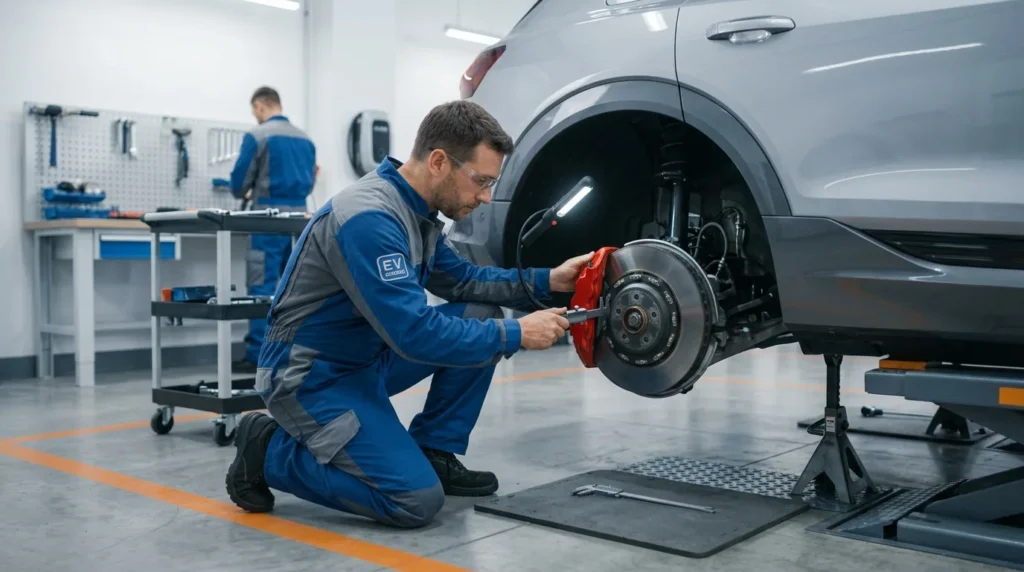
Inspect Brake Pads and Rotors
Because regenerative braking performs much of the everyday slowing, brake pads may last significantly longer than those on gasoline vehicles.
However, they should still be inspected for:
- Excessive wear
- Corrosion
- Uneven braking surfaces
- Damage caused by moisture or road conditions
Routine inspections help ensure the braking system remains ready when full braking force is needed.
Check Brake Fluid
Brake fluid plays a critical role in hydraulic braking performance.
During scheduled maintenance, technicians may inspect:
- Brake fluid condition
- Fluid level
- Moisture contamination
- Brake line condition
Following the manufacturer’s maintenance schedule helps maintain safe braking performance.
Cooling System Maintenance
Many electric vehicles use liquid cooling systems to help regulate battery and power electronics temperatures.
Keeping these systems functioning properly is important for battery efficiency and long-term reliability.

Battery Cooling System
The battery cooling system helps maintain an appropriate operating temperature during:
- Charging
- Fast charging
- High-speed driving
- Hot weather
- Cold weather
Maintaining proper battery temperature supports charging performance and overall battery longevity.
Coolant Inspection
Some EVs require periodic inspection or replacement of battery coolant based on the manufacturer’s maintenance schedule.
Routine coolant inspections help:
- Maintain proper battery temperature
- Improve system reliability
- Reduce the risk of overheating
- Support long-term battery performance
Always follow the maintenance intervals specified in your owner’s manual.
Suspension and Steering Inspection
Electric vehicles should also receive regular inspections of suspension and steering components.
Routine inspections may include checking:
- Shock absorbers
- Suspension bushings
- Steering components
- Wheel alignment
- Ball joints (where applicable)
Maintaining these systems helps ensure safe handling, ride comfort, and even tire wear.
Recommended EV Maintenance Schedule
One of the biggest advantages of owning an electric vehicle is its relatively simple maintenance schedule. Although every manufacturer has slightly different service recommendations, most routine maintenance focuses on inspections rather than replacing engine-related components.
Following the maintenance schedule in your owner’s manual helps keep your EV operating safely and efficiently while reducing the risk of unexpected repairs.

✅ Quick Tip
Save a digital reminder on your phone for monthly tire-pressure checks and for service intervals listed in your owner’s manual. A simple reminder can help prevent missed maintenance.
Note: Maintenance intervals vary by manufacturer and model. Always follow the service schedule provided in your vehicle owner’s manual for the most accurate recommendations.
Monthly Maintenance Checks
Some basic inspections can be performed every month or before long trips.
These include:
- Check tire pressure.
- Inspect tires for uneven wear or damage.
- Refill windshield washer fluid if necessary.
- Inspect windshield wiper blades.
- Check exterior lights.
- Verify charging cable condition.
- Keep the charging connector clean.
These simple checks require only a few minutes but can help prevent larger problems later.
Periodic Service Inspection
Even though EVs require less maintenance than gasoline vehicles, professional inspections are still recommended at the intervals specified by the manufacturer.
A scheduled service inspection may include:
- Brake system inspection
- Suspension and steering inspection
- Battery system diagnostic
- Cooling system inspection
- Tire condition and wheel alignment check
- Cabin air filter inspection
- Software updates
- Charging system inspection
Routine inspections help identify small issues before they become expensive repairs.
Common EV Maintenance Mistakes to Avoid
Electric vehicles are relatively easy to maintain, but some owners unintentionally develop habits that may reduce efficiency or increase maintenance costs.
Avoiding these common mistakes can help extend the life of your vehicle.
Ignoring Tire Maintenance
Because electric vehicles are generally heavier than comparable gasoline cars and deliver instant torque, tire wear deserves extra attention.
Ignoring tire pressure or delaying tire rotation may result in:
- Reduced driving range
- Uneven tread wear
- Poor handling
- Shorter tire lifespan
Regular tire maintenance remains one of the most important aspects of EV ownership.
Skipping Software Updates
Many EV systems continue improving long after the vehicle leaves the factory.
Ignoring manufacturer software updates may mean missing improvements related to:
- Battery management
- Charging performance
- Energy efficiency
- Navigation systems
- Driver assistance features
Keeping software updated helps your vehicle perform as intended.
Delaying Routine Inspections
Because EVs generally require fewer repairs, some owners assume regular inspections are unnecessary.
However, periodic inspections remain important for identifying wear in:
- Suspension components
- Steering system
- Tires
- Brakes
- Cooling system
- Charging equipment
Preventive maintenance is often less expensive than unexpected repairs.
How Much Does Electric Car Maintenance Cost?
Compared with gasoline-powered vehicles, electric cars typically have lower routine maintenance costs because they eliminate many traditional service items.
While exact costs vary depending on the vehicle, driving conditions, and service provider, many EV owners spend less on scheduled maintenance over the life of the vehicle.
Common maintenance expenses may include:
- Tire replacement
- Tire rotation
- Wheel alignment
- Cabin air filter replacement
- Brake fluid service (when recommended)
- Windshield wiper replacement
- Coolant service (if required by the manufacturer)
Because electric motors have fewer moving parts than internal combustion engines, owners generally avoid expenses related to oil changes, spark plugs, timing belts, and many engine repairs.
Related Guide: Compare overall ownership costs in our Do Electric Cars Save Money? Complete Cost of Ownership Guide (2026).
Factors That Influence Maintenance Costs
Maintenance expenses depend on several factors, including:
- Annual driving distance
- Road conditions
- Driving style
- Climate
- Tire quality
- Vehicle model
- Manufacturer service recommendations
Proper maintenance and careful driving habits can help reduce long-term ownership costs.
DIY Maintenance vs. Professional Service
Some routine maintenance tasks are simple enough for many owners to perform themselves, while others require specialized tools and trained technicians.
Understanding the difference helps ensure your EV remains safe and reliable.
Maintenance You Can Do Yourself
Many owners can safely perform basic tasks such as:
- Checking tire pressure
- Cleaning charging connectors
- Refilling washer fluid
- Replacing windshield wiper blades
- Inspecting exterior lights
- Monitoring software updates
- Checking tire tread condition
These routine checks require little time and can contribute to safer driving.
Maintenance Best Left to Professionals
Qualified technicians should handle certain maintenance procedures because they involve high-voltage electrical systems or specialized equipment.
Examples include:
- High-voltage battery diagnostics
- Cooling system service
- Brake system repairs
- Suspension repairs
- Wheel alignment
- Electrical system diagnostics
- Charging system repairs
Attempting these repairs without proper training can create safety risks and may affect your vehicle’s warranty.
Frequently Asked Questions
Do electric cars require regular maintenance?
Yes. Although electric vehicles require less routine maintenance than gasoline-powered cars, they still need regular inspections and servicing. Tires, brakes, suspension, cabin air filters, cooling systems, and software updates all play an important role in keeping an EV safe and efficient.
Do electric cars need oil changes?
No. Electric vehicles do not use internal combustion engines, so they do not require engine oil changes, oil filters, or many other engine-related maintenance services that gasoline vehicles need.
How often should an electric car be serviced?
The recommended service interval varies by manufacturer and vehicle model. Most automakers provide a maintenance schedule in the owner’s manual that includes routine inspections, tire rotations, brake checks, and software updates. Following this schedule helps maintain long-term reliability.
Are electric cars expensive to maintain?
In many cases, electric vehicles have lower maintenance costs than comparable gasoline-powered vehicles because they have fewer moving parts and eliminate services such as oil changes, spark plug replacement, and exhaust system repairs. However, maintenance costs can still vary depending on driving conditions, tire wear, and the manufacturer’s service recommendations.
What is the most important maintenance task for an electric vehicle?
While every maintenance task is important, regularly checking tire condition and pressure, following recommended charging practices, keeping software up to date, and completing scheduled inspections are among the most effective ways to maintain an electric vehicle’s performance and efficiency.
Related Guide: See how EV maintenance compares with hybrids in our EV vs Hybrid: Which Should You Buy? (2026 Comparison Guide).
Final Thoughts
Maintaining an electric vehicle is generally simpler than maintaining a traditional gasoline-powered car, but regular care is still essential for safe and reliable operation.
Routine inspections of tires, brakes, suspension, cooling systems, and charging equipment help ensure your EV continues to perform efficiently throughout its lifetime. At the same time, following the manufacturer’s maintenance schedule and installing software updates can improve reliability and support long-term battery performance.
One of the greatest advantages of EV ownership is the reduced need for routine engine-related servicing. Without oil changes, spark plugs, fuel filters, or complex exhaust systems, many owners enjoy lower maintenance requirements while benefiting from a quieter and more efficient driving experience.
By taking a proactive approach to maintenance and addressing small issues before they become larger problems, you can help protect your investment, maximize driving range, and maintain your vehicle’s resale value.
As electric vehicles continue to evolve, proper maintenance will remain one of the keys to dependable ownership. With the guidance provided in this article, you now have a clear understanding of the essential maintenance tasks that help keep an electric vehicle operating at its best.